Paper and cardboard: the recycling workhorse
Paper and cardboard are among the most recycled materials in the world. Here's how the process works and how to maximise their value.
Paper and cardboard are the quiet workhorses of recycling — among the most collected and recycled materials in the world, and a dependable earner at any buyback. From cereal boxes to delivery cartons to office paper, fibre is everywhere, and recovering it is one of recycling's great success stories. Here's how it works and how to get the best value.
Why paper recycling matters
- Saves trees. Recycling fibre reduces the need to harvest new wood pulp.
- Saves energy and water. Making paper from recycled fibre uses less of both than virgin production.
- Diverts landfill. Paper and cardboard are bulky and make up a big share of waste.
- Cuts emissions. Less virgin production and less landfilled organic material mean fewer emissions.
- Reliable value. There's steady demand from local mills for recovered fibre.
Understanding paper grades
Not all paper is equal. Recyclers sort it into grades, which affects value:
- White/office paper — among the higher-value grades.
- Newspaper and magazines — common and useful.
- Cardboard (K4) — corrugated boxes, a reliable workhorse grade.
- Mixed paper — lower grade, but still recyclable.
Keeping grades separate where you can — especially white paper and cardboard — earns more.
How paper recycling works
- Collection and sorting. Paper is gathered and sorted by grade.
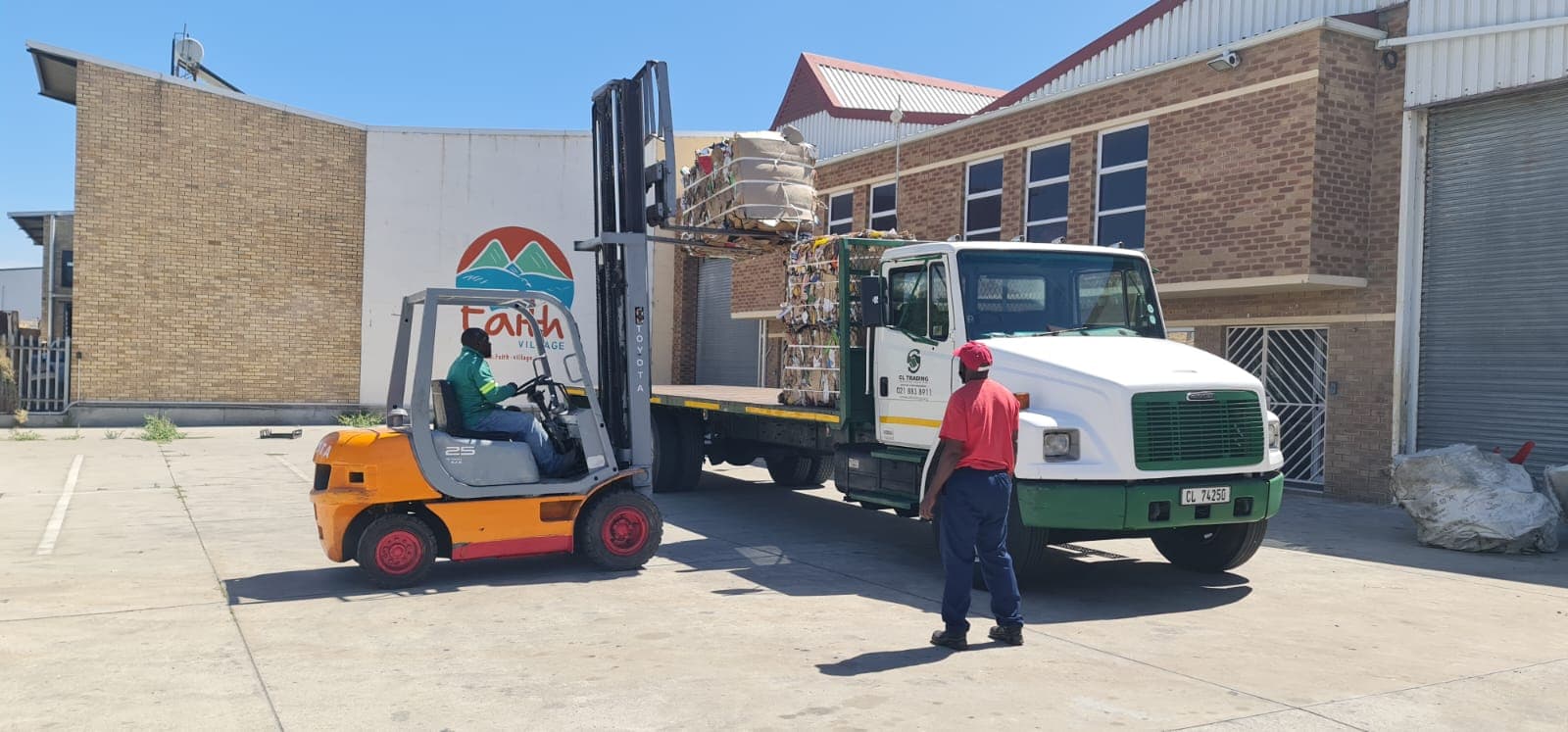
- Baling. Sorted fibre is baled for transport to mills.
- Pulping. At the mill, paper is mixed with water and broken down into fibre slurry.
- Cleaning and de-inking. Contaminants and ink are removed.
- Reforming. The clean pulp is pressed and dried into new paper and cardboard.
Fibre can be recycled several times before it becomes too short and weak, after which it's best composted.
The enemy: moisture and contamination
Paper's biggest weaknesses are water and food:
- Wet paper and cardboard lose value fast and can be rejected. Cape Town's wet winters make dry storage essential.
- Greasy or food-soaked paper (like oily pizza boxes) can't be recycled with clean fibre.
- Waxed and laminated cartons are harder to recycle and often not accepted.
How to maximise value
- Keep it dry — store paper and cardboard under cover, never out in the rain.
- Flatten boxes — saves space so you can carry and store more.
- Remove tape, staples and polystyrene where easy.
- Separate grades — white paper and cardboard apart from mixed paper.
- Keep it clean — no food, no grease.
- Build volume — paper is light, so accumulate a good amount for a worthwhile load.
What to leave out
- Wet or food-soiled paper
- Waxed cartons and laminated paper
- Tissues, paper towels and serviettes
- Thermal till slips (often non-recyclable)
A business opportunity
For businesses — retailers, offices, warehouses — cardboard and paper are generated in large, clean volumes daily. Separating and baling this fibre turns a disposal cost into a recoverable asset. WasteGo Green helps businesses set up cardboard and paper collection alongside their other recyclables.
The dependable performer
Paper and cardboard may not be glamorous, but they're the backbone of recycling: high-volume, widely recyclable, reliably valuable, and made into new products that we all use. Keep your fibre clean, dry and sorted, and it'll reward you while saving trees, energy and landfill space.
To recycle your paper and cardboard — from a household bundle to a business's daily volumes — contact WasteGo Green.
Got recyclables? Turn them into cash.
Bring your sorted recyclables to WasteGo Green and get paid by weight.