Understanding Extended Producer Responsibility (EPR) in South Africa
EPR makes producers responsible for the packaging they put on the market. Here's what it means, why it matters, and how it funds recycling.
If recycling in South Africa has grown noticeably in recent years, one major reason is a policy with a clunky name and a big impact: Extended Producer Responsibility, or EPR. It's reshaping who pays for managing packaging waste — and it's a key reason buyback initiatives like Packa-Ching can keep growing.
What is EPR?
Extended Producer Responsibility is the principle that the companies which put products and packaging on the market are responsible for managing those products at the end of their life — not just consumers and municipalities. In other words, if you make or sell packaging, you help pay for collecting and recycling it.
The idea is to shift the cost and responsibility of waste "upstream" to producers, giving them a financial incentive to design packaging that's easier to recycle and to fund the systems that recover it.
EPR in South African law
South Africa's EPR regulations came into effect in 2021 under the National Environmental Management: Waste Act. They made EPR mandatory for producers in sectors including paper and packaging, electrical and electronic equipment, and lighting. Producers must either run their own compliance scheme or — far more commonly — join a Producer Responsibility Organisation (PRO) that manages it collectively.
Producers pay EPR fees based on the type and volume of packaging they place on the market. Those fees fund collection, sorting, recycling and the development of the entire value chain.
Where Polyco fits in
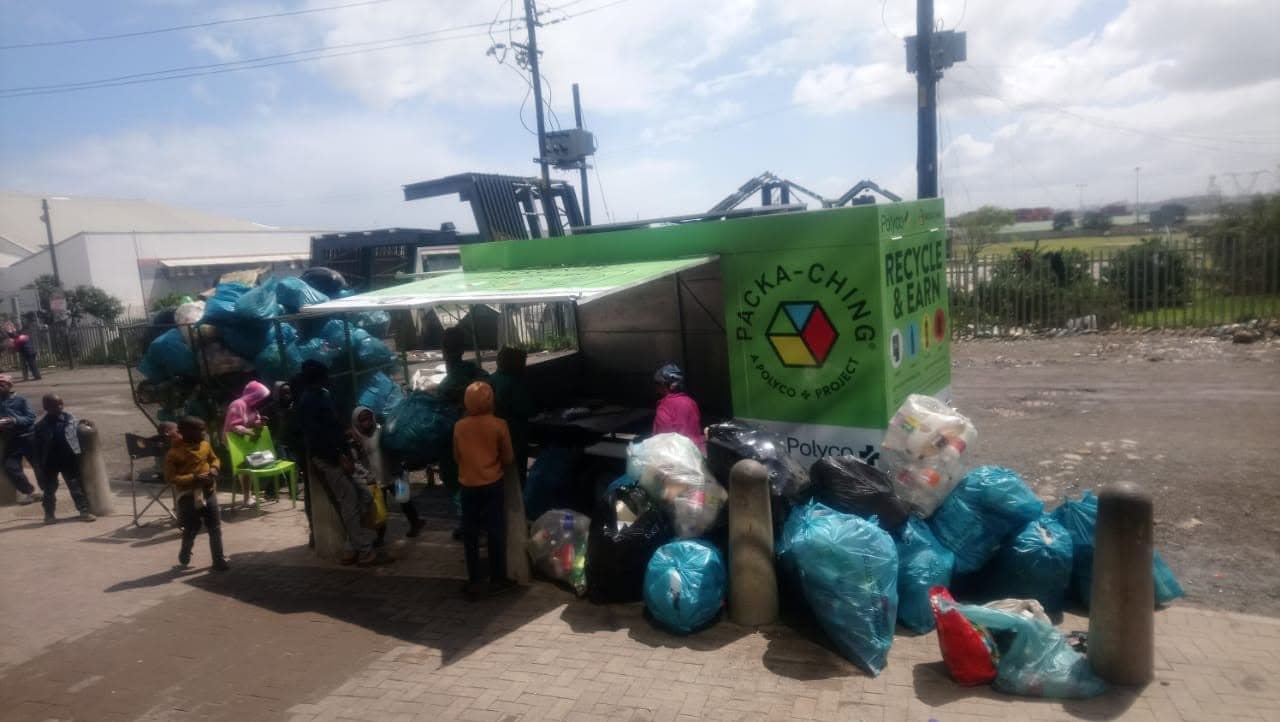
Polyco is a Producer Responsibility Organisation for plastics. It collects EPR fees from member producers and invests them in growing plastics recycling — funding infrastructure, collection programmes, buyback initiatives like Packa-Ching, education and market development. This is how producer money flows down to community-level operators like WasteGo Green and, ultimately, to the people who collect recyclables.
Why EPR matters for ordinary people
EPR can sound like distant policy, but it has real, on-the-ground effects:
- More buyback points and collection programmes, because there's funding behind them.
- Income for collectors, as producer fees support the value chain that pays for recyclables.
- Better-designed packaging that's easier to recycle, because producers are incentivised to make it so.
- Less waste to landfill, as more material becomes economically worth recovering.
EPR and the circular economy
EPR is a cornerstone of the shift from a "linear" economy (make, use, throw away) to a circular one (make, use, recover, remake). By making producers accountable for the full lifecycle of their packaging, it builds the financial engine that keeps materials in use. It complements South Africa's National Waste Management Strategy and the City of Cape Town's drive to divert waste from landfill.
Challenges that remain
EPR is still maturing in South Africa. Challenges include ensuring all producers comply and pay their fair share, channelling funds effectively to where collection actually happens, formalising and protecting informal collectors, and improving packaging design industry-wide. But the foundation is now in place, and the trajectory is positive.
The takeaway
EPR is the quiet policy powering much of the recycling growth you see around you. It ensures that the companies profiting from packaging help pay to recover it, and it funds the buyback days, collection programmes and infrastructure that turn recyclables into income and keep them out of landfill. Every time you sell at a Packa-Ching buyback, you're part of a value chain that EPR helps make possible.
Want to recycle within this growing system and be paid for it? Connect with WasteGo Green and find your nearest buyback point.
Got recyclables? Turn them into cash.
Bring your sorted recyclables to WasteGo Green and get paid by weight.