How residential complexes in Parklands can recycle better
Body corporates and complexes generate a lot of recyclable waste. Here's a practical playbook for setting up recycling that residents actually use.
Residential complexes in areas like Parklands are home to dozens or hundreds of households, which means they generate a lot of waste — and a lot of recyclable material. With a good system, a complex can divert much of that from landfill, keep common areas cleaner, and even demonstrate compliance with the City of Cape Town's waste expectations. Here's a practical playbook for body corporates and managing agents.
Why complexes are ideal for recycling
- Volume. Many households in one place means recyclables add up quickly to worthwhile quantities.
- Shared infrastructure. A central bin area makes collection efficient.
- Community. Neighbours can encourage and reinforce good habits.
The challenge is usually not the material — it's setting up a system people will actually use.
Step 1: Get buy-in
Recycling at a complex works best when the body corporate or HOA backs it. Put it on the agenda, explain the benefits (cleaner premises, possible cost savings, environmental responsibility), and appoint a champion or small "green committee" to drive it.
Step 2: Set up separation at source
Separation at source means residents sort recyclables from general waste at home before it reaches the communal area.
- Provide or recommend a simple two-bag system per household: dry recyclables and general waste.
- Set up clearly labelled communal bins for recyclables, ideally split into paper, plastics/cans, and glass.
- Place them conveniently next to the existing refuse area — convenience drives participation.
Step 3: Make it easy and clear
- Use clear signage with pictures showing what goes where. Visual guides beat text.
- Keep the bin area clean and well-maintained so it stays pleasant to use.
- Communicate the collection schedule so residents know the rhythm.
Step 4: Arrange reliable collection
This is where a service partner matters. WasteGo Green can:
- Supply bins and signage
- Run scheduled collections of the recyclables
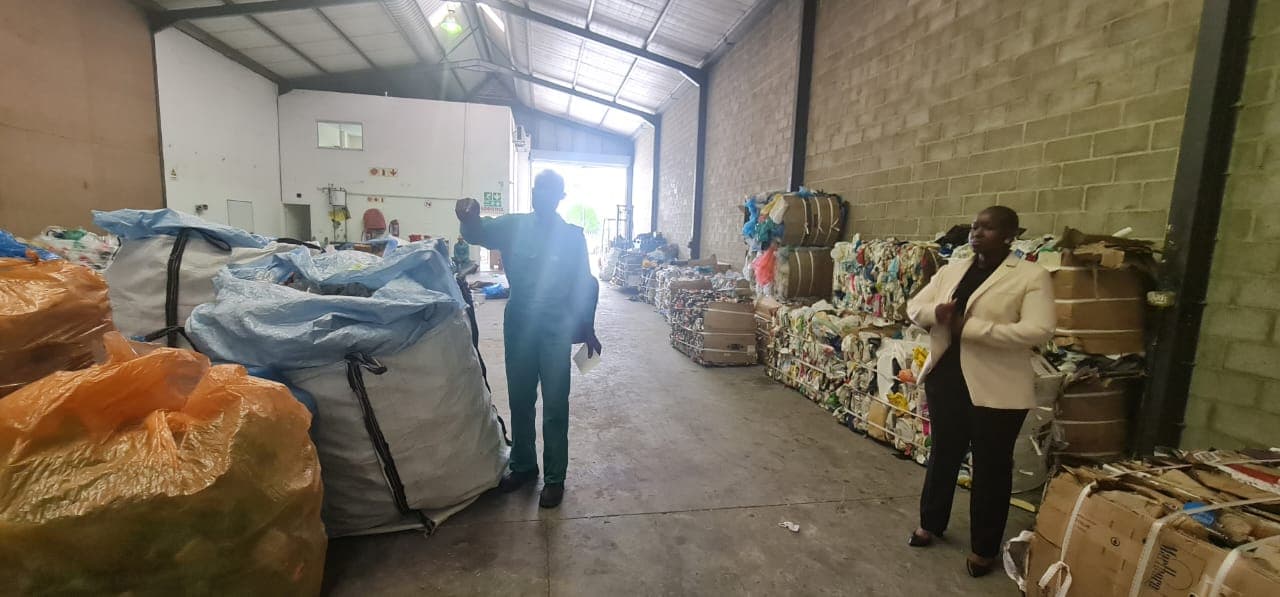
- Sort, process and bale the material at our facility
- Provide diversion reporting so the body corporate can see its impact
A reliable collection partner means the system never backs up — the fastest way to kill a recycling programme.
Step 5: Educate and remind
- Welcome new residents with a simple recycling guide.
- Send periodic reminders via the complex's WhatsApp group or notice boards.
- Share results: "This quarter we diverted X kg from landfill" builds pride and momentum.
Common pitfalls to avoid
- Confusing bins. Too many categories or unclear labels lead to contamination.
- Inconvenient placement. If recyclables bins are far from where people dump waste, participation drops.
- No collection plan. Overflowing bins teach residents the system doesn't work.
- One-off effort. Recycling needs ongoing communication, not a single launch.
The benefits add up
A well-run complex recycling programme:
- Reduces landfill waste and supports the city's diversion goals
- Keeps premises cleaner and more attractive
- Can lower waste costs by reducing general-waste volumes
- Builds community around a shared, positive habit
- Demonstrates responsibility that residents and buyers value
Let's set it up
WasteGo Green specialises in helping complexes, schools and businesses in Parklands and the northern suburbs recycle properly — from bins and signage to scheduled collection and reporting. If you manage or live in a complex that wants to recycle better, get in touch and we'll help you build a system that lasts.
Got recyclables? Turn them into cash.
Bring your sorted recyclables to WasteGo Green and get paid by weight.